Friday, May 18, 2012

Dwyane Wade clashes with his coach, the Pacers dominate the paint and take the series lead (VIDEO)

INDIANAPOLIS -- The Indiana Pacers have the length, athleticism and defensive pedigree to create a rough night for even the most prolific of scorers, but nobody could have expected this. The Pacers capably defended their home court in Thursday night's 94-75 Game 3 victory over the Miami Heat, holding Dwyane Wade to a horrific 2-for-13 night and LeBron James to a 3-for-9 mark from the floor in the second half. Miami's frustration was typified by a third-quarter jawing match between Wade and Heat coach Erik Spoelstra, fueled by both Wade's sluggish play and a 52-29 run that helped the Pacers pull away in the second and third quarters.

The Game 3 performance was a low point for Wade, who has missed 40 of his 58 shots in the series. Worse, the 2006 Finals MVP looked both hesitant and frustrated, seemingly trying to shoot himself out of the slump. And his Miami-styled brand of insouciance was less than appealing. Wade said afterward he "was not trying to force it out there," but we disagree. He finished with five points in what was obviously the worst playoff game of his eight-year career.

[Also: Kobe Bryant, LeBron James on Forbes list of most powerful celebrities]

Indiana put Wade in this bad place. Not only do the Pacers feature a litany of long wing defenders bent on chasing him around his various screens, but the presence of All-Star center Roy Hibbert loomed large in the win. Hibbert scored 19 points for Indiana, taking advantage of that limited Miami front line, but his biggest impact came on the defensive end as his length helped chase Wade and James into mid-range looks that they could not connect on. Hibbert added 18 rebounds and five blocks, and his individual defense in one significant fourth-quarter stretch almost singularly quelled Miami's last chance at a comeback.

Pacers coach Frank Vogel was pleased, calling Hibbert's performance the "best game I've ever seen him play," while still refusing to fully credit his team for shutting down Wade. "Paul George," Vogel said, "is one of the top five most versatile defenders in the NBA. But you can't give Paul all the credit. Wade had an off night."

Did he ever. Not only did Wade's frustrations take the Heat out of their offense, as he attempted to fire his way back into his typical box-score prominence, but his failure to get back on defense and (at times) go over the top on Indiana's screens drew Spoelstra's ire.

Not that their third-quarter "conversation" was troubling the Heat coach.

"That happens," Spoelstra said. "You have no idea how often things like that happen. That was during a very emotional part of the game when we were getting our butt kicked.

"Dwyane and I," Spoelstra reminded, "have been together a very long time. Very long time."

[Also: Lakers' Kobe Bryant fails in crunch time against the Thunder]

Spoelstra also refused to blame Wade's woes on any possible injury, and pointed to the fact that just about every active NBA player is banged up as they work through the second round of the playoffs. LeBron James conceded Wade "wasn't himself," but refused to point to any possible injury to Wade beyond "what we all have," referring to the typical "bumps and bruises" that teams have to work through in mid-May. Wade, as you'd expect -- "He'll never make excuses," Spoelstra said -- declined to admit to any nagging injury and passed on discussing his third-quarter tiff with Spoelstra. Every other member of the Heat's rotation (which apparently does not include Udonis Haslem, who didn't play in the second half) followed that company line. Wade's not hurt, and whatever pain he has, isn't affecting him.

Which is probably correct. The Pacers are the reason for Wade's play, because with the "major component" that Spoelstra referred to (Chris Bosh) missing, the Pacers were allowed to overplay Miami's pick-and-rolls and ignore Bosh's replacements in the middle. Hibbert admitted as much postgame, pointing out that Bosh's ability to create off broken plays provides a wrinkle that often forces Hibbert's mind to be elsewhere. With the big center allowed to solely focus on keeping the Heat drivers out of the paint, 75-point games will result.

Freed from Bosh's triple-threats, Hibbert was able to dominate. And he, presumably, earned a plaudit in a postgame text from San Antonio's Tim Duncan, who worked out with Hibbert during the offseason -- a mentor who Roy says, "texts me after every game."

[Also: James Harden gives Metta World Peace a taste of his own medicine]

While it's hard to imagine the graybeard Duncan busting out a smartphone, it's not as tough to see the Pacers possibly running away with this series. The Heat still have the best two players on the court at any time, but Indiana can guard those best two with their best three or even four, leaving centers wide open and forcing Mario Chalmers, who was excellent with 25 points and zero turnovers before injuring his left wrist just before the final buzzer, and Shane Battier, who was not, missing all seven of his attempts from the field, to beat them. All of this can change with a few tweaks from Spoelstra in Sunday's Game 4, and the Heat could take back home-court advantage in a flash. But that would also have to involve the Pacers backing off a bit.

Don't expect them to. With Bosh hurting -- and just a couple of wins removed from the conference finals they visited six times between 1994-2004 -- these Pacers have an upset in their sights.

After Thursday's performance, though, could it really be termed an upset? Especially when the Pacers looked so good at making Dwyane Wade ? well, upset?

Other popular content on the Yahoo! network:
? Marc J. Spears: No denying Kevin Durant's greatness after Thunder's comeback win
? New York Giants receive jewel-encrusted Super Bowl XLVI rings
? Y! Tech: Fifteen current technologies a child born today will never use

Phil Mickelson Texas Rangers Washington Nationals

Marek Vs. Wyshynski Radio: Hunter out in DC; Dave Lozo on Rangers/Devils; Kings dominate

It's a Monday edition of Marek vs. Wyshynski beginning at 2 p.m. ET/11 a.m. PT, and we're talking about the following and more:

Special Guest Stars: Dave Lozo of NHL.com joins us to break down the New York Rangers vs. New Jersey Devils and generally be funnier than we are.

? In which Marek and Wysh discuss Dale Hunter's departure as Capitals coach.

? The LA Kings roll in Game 1.

? Puck Headlines and Talking Points

Question of the Day: 'Give the Stanley Cup Conference Finals a name (e.g Frozen Four)'

Email your answers to puckdaddyblog@yahoo.com or tweet them with the hashtag #MvsW to either @jeffmarek or @wyshynski.

Click here for the Sportsnet live stream or click the play button above! Click here to download podcasts from the show each day Subscribe to the podcast via iTunes or Feedburner.

NFL Toronto Raptors Tampa Bay Rays

Thursday, May 17, 2012

The Shutdown Corner Interview: New York Giants DL Justin Tuck

It's been a busy week for New York Giants defensive lineman Justin Tuck. On Thursday, he picked up the second Super Bowl ring of his career -- and the night before, he was in New York City at the Intrepid Sea, Air and Space Museum, for a screening of the movie, "Battleship," to benefit the Wounded Warrior Project. The WWP is a not-for-profit organization whose mission is to honor and empower wounded warriors, and Tuck was there in conjunction with SUBWAY restaurants. The movie, directed by Peter Berg ("Friday Night Lights"), stars Col. Greg Gadson, a member of the WWP who lost both his legs in Iraq in 2007, and who has been an inspirational force for the Giants ever since. We had the opportunity to speak with Tuck about the premiere, the Giants, a couple of Super Bowl wins, and his NFL future.

Shutdown Corner: First, could you talk about the "Battleship" screening?

Justin Tuck: Colonel Gadson is in the movie, and he's meant so much to myself and to the New York Giants, it's just a good way to support the people who are overseas, fighting for our freedoms.

SC: Colonel�Gadson is the man who came to your facility during the 2007 season and proved to be such an inspiration for you, right?

JT: Right. I first met him in 2007, just before that Super Bowl, and coach Coughlin brought him in to do a motivational speech. One of our coaches at the time knew Colonel Gadson pretty well, and he just wanted an opportunity to tell his story to us. After that, he had such an impact, he became like a member of our team. He would go on the road with us, three or four games a year -- as many as he could make it to -- and he really had an impact on our team. So, he's been around since 2007, I've known him since then, and we've had the opportunity to watch him battle with the struggles he's had from serving over there. You marvel at the fact that he never complains -- he's always upbeat, and he's always lifting us up. That's amazing from a guy who doesn't have any legs.

SC: It kind of puts things in perspective, doesn't it?

JT: Oh, no question. You really can't allow yourself to complain about anything, when you see a guy who could have easily given up on life, but he's making the best of it.

SC: Obviously, we're not talking about the same level of risk in football, but there has been a lot of talk about player safety lately. Where do you stand on the issue, and how well do you think the NFL is handling it?

JT: It's a serious issue, The game we play is a physical sport, and we put our bodies on the line every time we go out on that that field. But it's something ... we know the dangers that come with it, but the dangers are a real issue, and I hope we'll find ways to minimize them. That goes with a combination of the equipment we're using, to the rules changes by Commissioner Goodell and his bunch. Just being more aware of player safety from the players' standpoint, also.

SC: Right. People say, "Well, you guys knew what you signed up for when you decided to play this game," but that doesn't mean that more shouldn't be done. Specifically, do you think there should be more of an outreach for players after they're done with the game?

JT: I think so, because there's one thing about players -- most players won't ask for help until it's too late. That's something that's ingrained in us, and it's unfortunate. Hopefully, we can get the word out to former players and current players that if you need help, there is help. Like with [Junior Seau], you think that could have been prevented, but unfortunately, it wasn't. Hopefully, it's a sign to guys who might be going through the same thing, where they say, "I want to live -- I want to enjoy my life" and you get the help that is provided to you.

SC: On the positive side of that equation, your old buddy Michael Strahan has made quite the successful transition in his post-football career. How much of a mentor was he to you, and do you still talk a lot?

JT: Oh, we definitely talk a lot. He's back and forth to New York every month, and we talk in person and on the phone. He's definitely meant a lot to me in my career. Coming in as a rookie, he was well-established at the time as the best defensive end in the league. It was fun to get to work with him every day, and mirror how he went about his business-- on the field, and off. I give him a lot of credit for putting me in the right positions and introducing me to the right people. And inspiring me to the work ethic I have today. Because I just tried to follow in his footsteps.

SC: I was in the locker room after Super Bowl XLVI, and he was there talking to you guys, and he almost looked happier than the current players did about the result.

JT: Yeah -- we were texting and talking back and forth through the whole playoff run. He just continued to congratulate us and tell us how to get prepared for these games. He's definitely a true Giant, and he'll always be one. When you see him on Sunday mornings [on Fox's pregame show], and he's picking the teams, he's always going to bleed Giant blue. He can't help it.

SC: Watching both of the Super Bowl games the Giants won in the last five years, I had you pegged as the MVP in both cases, until Eli Manning corked off two of the most amazing throws in Super Bowl history in what turned out to be the game-winning drives each time. Obviously, you'd rather have the ring than the MVP award, but do you ever wonder what might have been?

JT: You know, I'd rather have 10 Super Bowl trophies and no MVPs. The whole thing about having the MVP -- I don't care. I could care less, because the way I look at it, I can't play the game by myself. If I got one, I'd probably cut it into 10 other pieces and give it to my defensive teammates.

SC: It must be a great point of pride, though, to play at your very best when it matters the most.

JT: We're all brought up to believe that the best players show up in the biggest games, and what bigger game than the Super Bowl? I've just been blessed and very lucky to have two of my best games on that stage. I'm very humbled to have that opportunity, and if I get another opportunity, I'm just going to go out there like I did last time and give 100 percent.

SC: One of the most remarkable things about your play -- and you seemed to be kind of a trend-setter in this regard -- is that you will be seen playing well all across the formation. That's become more common in the last few years, but how did that develop for you? Was that something you did at Notre Dame, or did it start when you got to the NFL?

JT: It started in New York, because when I came in, you had Michael Strahan and Osi Umenyiora on two different sides. So, it was a way for me to get on the field at first - you put your best pass-rushers on the field. I didn't like the thought of it at first, and I wasn't really good at it a first, but I got an opportunity to learn more about it, and learn more about how to rush from inside. it's just something that gradually became part of my game.

SC: When you look at the Super Bowl XLII team, and the XLVI team, which one was better?

JT: I think this one has more talent -- younger guys, but guys who had been there before and knew how to win those types of games -- but it's hard to compare to the 2007 team. That '07 team had tremendous heart. Both teams had tremendous heart, but if I was to pick one of the two, I would say this last year's team, because it seems that we have more of a talent [base].

SC: You've clearly done a lot in your career -- what is left for you to accomplish?

JT: I just want to continue to play great football -- that's all that matters. I don't really care about the accolades or any of that. Everything to me is about team football, and if we keep winning Super Bowl trophies, I'll be fine.

San Antonio Spurs Vince Carter Amare Stoudemire

This Austrian media outlet could use more tact when writing headlines about Josh Hamilton

OK, so there's nothing factually wrong about news.at's account of Josh Hamilton's four-homer night on Tuesday. Hamilton's past history of drug abuse is apparently known the world over, as this headline from a website based in Vienna, Austria, exhibits.

At the same time, it seems a bit wrong to lead a headline with an unfortunate fact from someone's past. After all, we could have started the headline to this post with "From the country where Adolf Hitler was born." But we didn't, did we?

Stay classy blunt, Vienna!

Big BLS H/N: Reddit

Want more baseball fun all season long?
Follow @bigleaguestew,�@KevinKaduk and the BLS Facebook page!

Philadelphia 76ers NFL Toronto Raptors

Wednesday, May 16, 2012

John Axford leaves note for Milwaukee media after blowing his 49-save streak

No one would have begrudged John Axford had the Milwaukee Brewers closer failed to provide any quotes about seeing the end of his streak of 49 straight saves on Friday night. His wife Nicole had just gone into labor with the couple's second child and Axford could not have been expected to stay until the end of an 8-7 Brewers win over the Cubs that lasted 13 innings and just over five hours. He couldn't dwell over the three runs he surrendered to the Cubs in the top of the ninth because he had to head straight to the hospital.

But because the friendly Canadian is one of the most accessible ballplayers around, Axford actually took the time to pen a note for Milwaukee's hard-working beat writers before leaving. And with the same composure he showed in racking up 49 straight saves ? his last blown save had come on April 18, 2011 against the Phillies ? Axford actually pulled off a big funny with his "cliche ... cliche ... another cliche" line.

[Also: Bryce Harper hits his own face with a bat, needs 10 stitches]

Though I once remember Paul Byrd leaving a note for Royals reporters after he had to head to the hospital for a MRI or X-ray, this sort of thoughtful communication is definitely not the norm and it's not going to go unnoticed by the media. Seriously, about the only way Axford can top it is if he returns to the clubhouse and starts passing out cigars.

Which, come to think of it, seems like a distinct possibility ...

Want more baseball fun all season long?
Follow @bigleaguestew,�@KevinKaduk and the BLS Facebook page!

Other popular content on the Yahoo! network:
? Clippers feel pain as they stumble into Game 7 against Grizzlies
? The real Phillip Thomas is an Eagle; the imposter wanted to be on the Redskins
? Novak Djokovic rips blue clay, former ATP chief after Madrid loss
? Shine video: Why U.S. star Shawn Johnson didn't leave gymnastics before Beijing Games

College Basketball Pittsburgh Steelers New Orleans Hornets

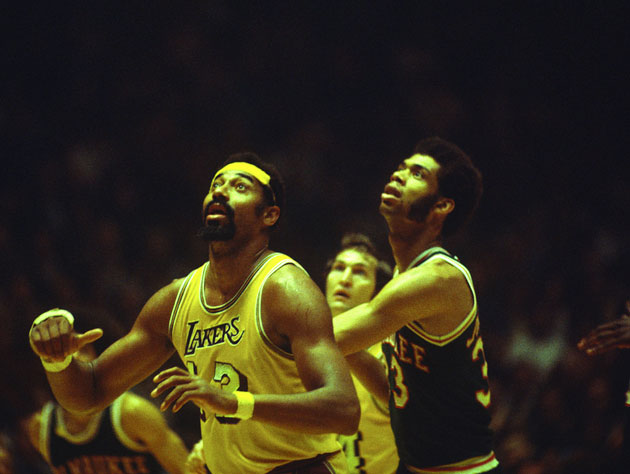
What happened to the great NBA center? The NBA happened

You see these sorts of columns just about every year, so this isn't breaking news, but it is of great interest now that the NBA has whittled itself down to eight teams. The typical NBA center, apparently, has gone bye-bye, and we're not sure if this is good or bad for the NBA. In a league that for decades was dominated by teams that seemed to boast the best big man around, the center position has become somewhat of an afterthought in the modern game. We think. Again, we're not entirely sure if this is new news, or entirely correct analysis.

The Atlantic's Kevin Fixler is the author of the newest piece, and he attributes the seeming lack of centers to the typical influences ? that the rash of injuries to NBA centers has depleted what was an already-shrinking group of big men that actually wanted to play center in the first place, rather than growing up emulating Magic and Michael. He also points to the increasing amount of underclassmen that jump to the NBA from college:

The problem has been exacerbated by younger and younger players entering the NBA, which is one of the reasons Clifford Ray, who is considered one of the foremost authorities on coaching centers, said fewer teams now have this essential rim protector. Little or no time in college has prevented these big men from gaining this specific skill set, while at the same time growing physically, mentally and technically. Since 2006, the league has prevented players right out of high school from becoming available in the draft. Now they must wait a full calendar year whether they play in college or not.

Again, this seems like a bit of an overreaction.

Forty years ago, with 17 NBA and 10 ABA teams in the running, the center position in the NBA was just as sparse. There were plenty of Joel Anthonys starting for NBA and ABA teams back then, and plenty of glorified power forwards being forced to man the pivot. The distinction, that you'll no doubt point out, is that a defense-first big like Anthony would not have survived decades ago because he doesn't rebound as well as his would-be contemporaries.

Well, why isn't Joel Anthony rebounding? And why isn't Roy Hibbert getting the ball down the stretch of Game 1 of the Indiana Pacers/Miami Heat series? Why is Andrew Bynum being criticized for his play in Monday's Game 1 between the Lakers and Thunder, despite coming through with a double-double? Why couldn't Yao Ming ever lead his team to a title, when healthy?

Because the game has evolved. It's too easy to point to youngsters obsessing over Michael Jordan, as if centers from other eras didn't grow up pretending to be Oscar Robertson or Jerry West in their playground games. And Joel Anthony doesn't rebound all that much, despite being only asked to play defense, because ? well, watch the guy.

Watch Miami's defensive schemes. Watch the talking, the moving, and the shifting, even without any trapping involved. This game is so fast, and the counters so exacting, that Anthony has time to rebound only after fulfilling the 13 other duties he's asked to do in a typical defensive possession for the Heat ? showing here, hedging here, roaming there, talking about this, doing that.

And Hibbert doesn't get the ball not because he's a big softie, but because the game is too fast for Roy Hibbert at times. And Roy Hibbert, deservedly, is an All-Star. The same went for Yao Ming, even when he was healthy and dropping 25 a game.

This is not a center's game anymore. Not because the centers stink, but because the game has gotten faster, smarter, and more detailed in its design. Attempt to dump it in all you want; the opposing defense already has two-dozen counters for that simplistic notion. And before you know it, there's five seconds on the shot clock, and the ball is 30 feet away from the goal.

Fixler's piece is a great read, and clearly well-researched, but ignoring the stylistic shifts along the way is to be missing the point. Yes, adding a 3-point line forced defenses to pay attention to long-range shooters, but in doing so it also cleared up the lanes for big men in ways the league hadn't seen in decades prior to the NBA's addition of the line in 1979 ? go watch clips of the league's pack-it-in style from the 1970s as compared to the 1980s or present day. The spacing, even with the legalization of a strong side zone (in 1999-00) and fully legal zone (before 2001-02) is much, much better.

The players are much, much quicker though. And able to cover that spaced-out floor better than ever. They also want to cover it, which is not something you can say for most NBA teams in previous eras. Nowadays terrible defenders are treated as laughingstocks, whereas in decades prior they made up half the NBA. And to point to what used to count as league-leading rebounding averages as some sort of proof of interior decline is laughable; due to the sheer difference in possession counts and shooting percentages. The NBA used to run and shoot more. Fruitlessly. Rebounds, shockingly, kind of happened. It's not Dwight Howard's fault that he pulls in 10 rebounds a game fewer than Wilt Chamberlain.

Invoking the litany of underclassman is a bit much, as well. Tim Duncan's "Mr. Fundamental" streak would have hit the NBA with the same force in 1996 or even 1995 (by most accounts, Wake Forest coach Dave Odom wasn't exactly churning out NBA-changing wisdom to the eventual MVP) had he declared for the draft earlier. Shaquille O'Neal was nearly as fundamentally "blah" in his final season last year as he was during his rookie turn in 1992, and the obsessive failure rate of four year centers taken with mid-to-late lottery picks over the last 25 years doesn't do much for that argument.

Then there is the size aspect. Yes, there were 7-2 guys roaming the earth 40 years ago, scoring 30 a game on skyhook after skyhook. But you also had Wes Unseld plodding in the paint as well, working at nearly the same height and build as LeBron James terrorizes the paint at today.

It's not just because Dirk Nowitzki was taught jump shots, first. Or that 6-10 Kevin Durant's game is more Ray Allen than Clifford Ray. It's a faster, more knowledgeable game that often can't wait for what used to work as NBA orthodoxy to set up in the low post.

That isn't to say that the importance of the position has declined. Not in the slightest.

All eyes will be on Hibbert on Tuesday night, as the Pacers attempt to steal one in Miami. The rebound battle between San Antonio's DeJuan Blair and Reggie Evans might decide a few quarters in this series, as the Clippers head into their time spent with the Spurs wondering if center DeAndre Jordan's game can fit in ways it couldn't against the mastery of Marc Gasol out of Memphis. Kevin Garnett's move to center turned Boston's season around, and the Philadelphia 76ers midseason dip, hot start, and current run can almost entirely be linked to Spencer Hawes' health.

And if you stayed up to watch the end of Oklahoma City's blowout win over the Lakers on Monday, you saw 7-footers Pau Gasol and Andrew Bynum on the bench for a good five minutes following the final buzzer. Trying to figure this [stuff] out. Knowing that they were going to be the deciding factor in this series, and any other series the Lakers care to play this season.

At some point, even the quickest-thinking and quickest-spinning big men can't keep up. And I don't think that's a problem. No, we don't see many skyhooks anymore (unless you count what JaVale McGee attempts from time to time), but how is any of this a problem when Kevin Durant just crossed you over, or Marc Gasol just hit a cutter, or Roy Hibbert keeps an entire franchise's hopes alive with his work in a game-deciding 12-2 run?

It wasn't the centers that got smaller, Joe Gillis. It was the game that got bigger. And better.

Atlanta Braves Barry Zito Nascar

Tuesday, May 15, 2012

Your Take Revealed: Was John L. Smith the right hire at Arkansas?

Your Take is a chance to start thoughtful, spirited, intelligent and nice conversation about some of the hotter topics in college football. Your Take Revealed is the consensus using your comments and your thoughts.

It's been nearly a week since Arkansas introduced John L. Smith as its interim coach for the 2012 season and last Wednesday I asked you, the fans, to weigh in on whether the hire was a good choice by athletic director Jeff Long.

Those who commented had mixed opinions on the move. Some believed it was a good short term move by the program while others weren't a big fan of the way Smith left his alma mater, Weber State, looking for a replacement with three months until fall camp.

"If I offer to pay you 7 times what you are currently making with an opportunity to do something you have dreamed of your whole life, you wouldn't take it?" Donald E. from Little Rock wrote. "Character matters but character doesn't put food on the table. He may have left Weber State, but they understand just like everyone else, if you get a better job offer: you take it."

However, some fans worried about the effect of an interim coach on recruiting, though I'm not sure that's a valid concern. Any recruit would be aware of the situation and encouraged that Arkansas is taking its time to get the best coach available instead of settling on someone this close to the season. Smith signed a 10-month deal. That's known. The other coaches will continue to recruit as they have before and they can tout Long's commitment to continuity.

And Smith is probably the team's best chance for continuity without upsetting the duties of the current coaching staff. Yes, Taver Johnson, Paul Haynes and Paul Petrino were mentioned as possible interims, but the Smith allows those coaches to concentrate on their current coaching duties and keep that flow.

"JL Smith is the best choice they could hope for at this late time," KP wrote. "If Ark goes 7-5 and the pig fans are angry, they should take out their anger on the former coach and the AD who hired him. If not Smith, then who???"

Of course, no one expects Arkansas to have a poor season with the talent it returns. If anything, Smith was hired to ensure Arkansas remains on track to be a contender for the SEC title and a possible BCS bowl berth. If it can stay on the course, then this interim season will be just a blip on the radar.

"At the least it will be an interesting and entertaining year," Scott K from New York wrote. "Continuity was priority number one for Jeff Long in 2012 and this will be as close as they can get to that if Smith sticks to his professed desire to let the coordinators work."

- - -
"Like" Dr. Saturday on Facebook for football conversations and stuff you won't see on the blog. And follow Dr. Saturday at its new home on Twitter: @YahooDrSaturday

New York Giants NHL Baltimore Orioles